
 By Lauren Holland
Updated November 2026
Choosing the best way to train for your first marathon starts with picking a training guide that matches your experience, schedule, and goals. Most first-time marathoners need a plan that builds weekly mileage gradually, includes a long run every week, and protects against injury with easy days and rest. The seven books below were selected by comparing their stated training approaches, the audience each one targets, the depth of plans and pacing advice they provide, and the general patterns owners report about how usable they are for beginners. This is a research-based comparison of published guides, not a set of products we have tested or used ourselves.
Our top picks at a glance
- 1
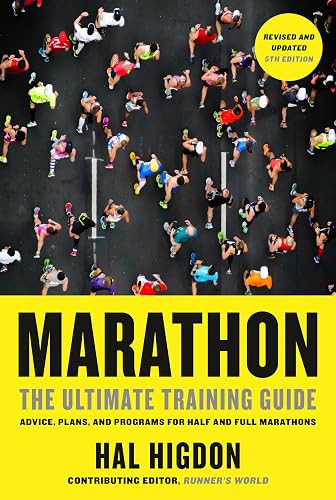 TOP CHOICEBest overallMarathon, Revised and Updated 5th Edition: The Ultimate Training GuideView on Amazon
- 2
 TOP CHOICEBest for a structured 20-week beginner planRunning Your First Marathon: The Complete 20-Week Marathon Training PlanView on Amazon
- 3
 TOP CHOICEBest for a British-style first-timer approach119 Days to Go: How to train for and smash your first marathonView on Amazon
- 4
 Best for runners who want a high-mileage systemRun Your Fastest Marathon the Hansons WayView on Amazon
- 5
 Best for runners stepping up from a half marathonHansons Half-Marathon Method: Run Your Best Half-Marathon the Hansons WayView on Amazon
- 6
 Best for runners considering longer races laterRunning Your First Ultra: Customizable Training Plans for Your First 50K to 100-Mile RaceView on Amazon
- 7
 Best for ultra-curious beginnersThe Ultra Marathon Bible: Your #1 Beginner’s Training Guide to PrepareView on Amazon
Our Top Picks
How we weighed the options
Each pick was judged against four criteria: how clearly it explains the logic of a first-marathon build, how well its plans suit someone who has not raced 26.2 miles before, how much guidance it gives on pacing, fueling, and recovery, and how well its structure matches the typical beginner profile described in running coaching literature. A plan that assumes years of base mileage or race experience ranks lower for a first-timer, even if it is excellent for advanced athletes.
Quick Comparison
| Product | Best for | Key feature |
|---|---|---|
| Marathon, Revised and Updated 5th Edition | Overall beginner guidance | Broad coverage of training, plans, and race prep |
| Running Your First Marathon: The Complete 20-Week Marathon Training Plan | Structured first-timers | Week-by-week 20-week build |
| 119 Days to Go: How to train for and smash your first marathon | Motivation-focused beginners | Day-by-day style progression |
| Run Your Fastest Marathon the Hansons Way | Runners wanting a cumulative-fatigue system | Lower-intensity high-frequency method |
| Hansons Half-Marathon Method | Runners moving up from 13.1 miles | Same philosophy scaled to half-marathon goals |
| Running Your First Ultra | Beginners planning ultras later | Customizable plans and training journal |
| The Ultra Marathon Bible | Ultra-distance beginners | Preparation and survival guidance for 50K–100 miles |
Marathon, Revised and Updated 5th Edition: The Ultimate Training Guide
Marathon, Revised and Updated 5th Edition: The Ultimate Training Guide: Advice, Plans, and Programs for Half and Full Marathons
Best for: Overall beginner guidance
This is a broad reference for runners preparing for a first half or full marathon who want to understand the reasoning behind their training, not just follow a calendar. It suits readers who like to read the principles and then adapt them.
Key specs
- Revised and updated 5th edition
- Covers half and full marathon training
- Includes training plans and programs
Pros
- Explains the purpose behind workouts, not only the workouts themselves
- Useful for both first-timers and runners returning to racing
- Covers race-week and recovery considerations
Cons
- Plans are general, so you may need to adjust them to your own schedule
- Can feel dense for readers who want only a single printed schedule
Bottom line: A strong first pick for runners who want a comprehensive reference and are willing to read before they train.
Running Your First Marathon: The Complete 20-Week Marathon Training Plan
Running Your First Marathon: The Complete 20-Week Marathon Training Plan
Best for: Structured first-timers
Designed for someone who wants a clear calendar from the first week to race day. It works well for runners who are already comfortable running three to four days a week and need a sequence to follow.
Key specs
- 20-week training plan
- Written for first-time full marathoners
Pros
- Easy to follow with a clear week-by-week structure
- Builds distance gradually, which suits beginners
- Reduces decision fatigue about what to run each day
Cons
- A fixed plan may not fit runners with irregular schedules
- Less explanation of the physiology behind each session
Bottom line: Best for beginners who want a plan to follow exactly and a timeline they can rely on.
119 Days to Go: How to train for and smash your first marathon
119 Days to Go: How to train for and smash your first marathon
Best for: Motivation-focused beginners
This guide is aimed at new marathoners who want encouragement alongside their training structure. It suits readers who find a countdown format helpful for staying consistent.
Key specs
- Countdown-style progression toward race day
- Focused on first marathon preparation
Pros
- Motivating structure that breaks the build into manageable blocks
- Accessible tone for readers without a running background
- Covers the mental side of the first marathon
Cons
- Less technical detail on pacing for experienced readers
- Owners who want advanced periodization may find it basic
Bottom line: A good match for first-timers who want a friendly, step-by-step approach with strong motivational support.
Run Your Fastest Marathon the Hansons Way
Run Your Fastest Marathon the Hansons Way Hansons Marathon Method: Run Your Fastest Marathon the Hansons Way
Best for: Runners wanting a cumulative-fatigue system
The Hansons approach is built around frequent, moderate-intensity running that accumulates fatigue over time. It is better suited to a first-timer who already has a solid running base and is comfortable with a demanding weekly rhythm.
Key specs
- Marathon-focused training method
- Emphasizes cumulative fatigue and frequent running
Pros
- Clear philosophy that explains why workouts are sequenced as they are
- Well regarded among runners who want a structured, high-volume build
- Covers marathon-specific workouts in detail
Cons
- Demanding for beginners with limited base mileage
- Requires a strong commitment to frequent running
Bottom line: Better for a first-timer with an existing running base who wants a rigorous system, not a gentle introduction.
Hansons Half-Marathon Method: Run Your Best Half-Marathon the Hansons Way
Hansons Half-Marathon Method: Run Your Best Half-Marathon the Hansons Way
Best for: Runners stepping up from 13.1 miles
This book applies the same core philosophy to the half-marathon distance. It is a sensible choice if your first big goal is 13.1 miles and you want to build toward a full marathon later.
Key specs
- Half-marathon focused training method
- Same underlying approach as the marathon edition
Pros
- Useful stepping stone toward a full marathon
- Consistent philosophy across distances
- Practical pacing guidance for the half-marathon
Cons
- Not written specifically for a full marathon debut
- Requires adapting the approach if you move to 26.2 miles
Bottom line: A good choice for runners whose first race is a half marathon and who plan to move up later.
Running Your First Ultra: Customizable Training Plans for Your First 50K to 100-Mile Race
Running Your First Ultra: Customizable Training Plans for Your First 50K to 100-Mile Race: New Edition with Write-In Training Journal
Best for: Beginners planning ultras later
This guide is for runners who see a marathon as a first step and want to plan toward 50K or longer. It includes a write-in journal, which suits readers who like to track each week.
Key specs
- Customizable training plans
- Covers 50K to 100-mile races
- Includes a write-in training journal
Pros
- Plans can be adapted to different race distances
- Journal format helps with consistency and logging
- Covers the progression from marathon to ultra
Cons
- Overkill if your only goal is a single marathon
- Customization takes time and some running knowledge
Bottom line: Best for runners whose marathon is a stepping stone to ultra distances.
The Ultra Marathon Bible: Your Beginner’s Training Guide to Prepare, Run, and Survive Your First 50k to 100 Mile Race
The Ultra Marathon Bible: Your #1 Beginner’s Training Guide to Prepare, Run, and Survive Your First 50k to 100 Mile Race
Best for: Ultra-distance beginners
This guide covers preparation, race execution, and survival strategies for runners taking on their first ultra. It is best for readers who are already thinking past the marathon.
Key specs
- Beginner-focused ultra training guide
- Covers 50K to 100-mile preparation
Pros
- Addresses race-day survival and nutrition over long distances
- Useful background for runners considering longer events
- Clear focus on the beginner ultra experience
Cons
- Much of the content is beyond the needs of a first marathon
- Less relevant for runners who only want a road marathon plan
Bottom line: A useful read for runners who expect to move from marathon distance into ultra distance soon.
Buying Guide
Choose a plan length that matches your timeline
Most first-time marathon plans run between 16 and 20 weeks, and that length matters. A shorter plan can leave a beginner under-prepared for the long run, while a longer one may suit runners who are starting from very low mileage. Check whether the guide states its starting mileage requirement and build length before you buy.
Good picks for this: Running Your First Marathon: The Complete 20-Week Marathon Training Plan, Marathon, Revised and Updated 5th Edition
Check the starting mileage assumptions
Many training plans assume you can already run a certain number of miles per week before week one. If you are new to running, look for a guide that starts with low volume and includes run-walk options or a base-building phase. Plans that begin at 25 or 30 miles per week are often too demanding for a true beginner.
Good picks for this: 119 Days to Go: How to train for and smash your first marathon, Marathon, Revised and Updated 5th Edition
Look for a long-run progression
The long run is the backbone of marathon preparation. A useful guide should show how the long run builds gradually, usually peaking around 18 to 20 miles for most first-timers, with taper weeks before race day. Compare how each book describes the progression and whether it explains the reasoning.
Good picks for this: Running Your First Marathon: The Complete 20-Week Marathon Training Plan, Run Your Fastest Marathon the Hansons Way
Consider your weekly running frequency
Some methods rely on four or five runs a week, while others use three with cross-training. Choose a plan that matches the number of days you can realistically run without losing sleep or missing work. Frequent-running systems can produce strong results but demand more recovery and consistency.
Good picks for this: Run Your Fastest Marathon the Hansons Way, Hansons Half-Marathon Method
Match the guide to your race distance
A marathon-focused guide will not always translate well to a half marathon, and ultra guides assume substantial experience beyond 26.2 miles. Confirm the race distance a book is written for before you buy. If your first race is shorter, a half-marathon guide may serve you better.
Good picks for this: Hansons Half-Marathon Method, Running Your First Ultra
Assess how much explanation you need
Some guides give you a calendar and little else. Others explain the physiology, pacing, fueling, and recovery behind each workout. If you want to learn why you are doing a session, choose a guide with more explanation. If you prefer to follow instructions and reflect later, a plan-first guide may be enough.
Good picks for this: Marathon, Revised and Updated 5th Edition, The Ultra Marathon Bible
Think about future goals
A first marathon is often the beginning of a longer running path. If you expect to race ultras or return to the marathon with a time goal, a guide that covers longer distances or advanced planning may be worth the extra depth. If your only goal is finishing your first 26.2, a focused beginner plan is usually enough.
Good picks for this: Running Your First Ultra, The Ultra Marathon Bible
FAQ
How long should I train for my first marathon?
Most beginner plans run between 16 and 20 weeks. The right length depends on your current weekly mileage and how comfortable you are running several days a week. Starting from a low base usually calls for the longer end of that range.
How many days a week should a first-time marathoner run?
Three to four days a week is typical for beginners, with one long run per week that grows over time. Some plans add a fifth day for experienced runners. Consistent running matters more than hitting a high number of days early on.
What is the longest run before a first marathon?
Many first-time plans peak the long run at about 18 to 20 miles, roughly two to three weeks before race day. Some runners do not go beyond 20 miles in training and still finish well. The key is a gradual, steady build.
Should I run every day during marathon training?
Daily running is not necessary for most first-timers. Rest days and easy runs help your body adapt and reduce injury risk. Cross-training such as cycling or swimming can add fitness without extra impact.
Do I need a coach to train for my first marathon?
A coach is helpful but not required. A well-written guide or plan can take you to the start line if you follow it consistently and adjust for injury or illness. If you have a history of injury or medical concerns, consult a doctor or a qualified running coach before starting.
What should I do if I get injured during training?
Stop or reduce running at the first sign of sharp or persistent pain, and rest. Consult a healthcare professional, such as a sports medicine doctor or physical therapist, before resuming. Pushing through injury often leads to missed training weeks later.
Conclusion
The best way to train for your first marathon is to pick a guide that matches your current running base, your weekly schedule, and your longer-term goals. For a broad, well-explained reference, Marathon, Revised and Updated 5th Edition is a strong starting point. For a structured week-by-week build, Running Your First Marathon: The Complete 20-Week Marathon Training Plan suits many beginners. If you want motivation and a countdown format, 119 Days to Go fits well. Runners with an established base who want a demanding system may look at the Hansons books, while those planning a half marathon first or ultras later have dedicated options. Choose the plan you will realistically follow, and build gradually.
Sources
- General guidance on physical activity levels and recovery for adults starting new exercise routines (cdc.gov)
- Research summaries on running injury risk, training load, and musculoskeletal recovery (nih.gov)
- Professional position statements on exercise progression and safe training for endurance events (acsm.org)
Related reading
- What's a Good First Marathon Time? Realistic Goals by Pace
- What's a Good First Half Marathon Time? Realistic Goals for Beginners
- What Is the Best First Time Marathon Goal? Realistic Times and Picks
- What Is a Good First Marathon Time? Realistic Goals by Pace
About Lauren Holland
Lauren Holland is part of our editorial team and reviews and edits our marathon & half-marathon guides, checking product details against manufacturer specifications and owner feedback.
