
 By Lauren Holland
Updated November 2026
Runners searching for hal higdon 3 day half marathon training usually want a plan that fits three runs a week without sacrificing race-day readiness. The picks below were chosen by checking product listings, brand reputation and common owner feedback patterns, with a focus on how clearly each book explains three-day weekly schedules, cross-training and long-run progression.
Our top picks at a glance
- 1
 TOP CHOICEBest overallHal Higdon's Half Marathon TrainingView on Amazon
- 2
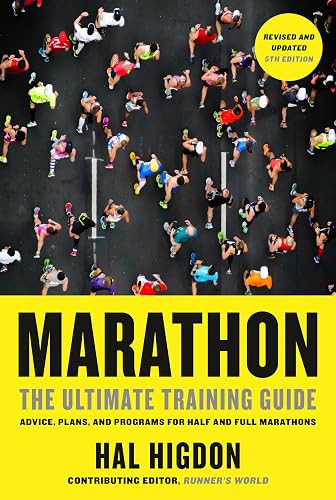 TOP CHOICEBest for complete referenceMarathon, Revised and Updated 5th EditionView on Amazon
- 3
 TOP CHOICEBest for a calm, structured approachThe Half Marathon Training PlanView on Amazon
- 4
 Best for stepping up to a full marathonHalf Marathon to Full Marathon Training GuideView on Amazon
- 5
 Best for a faster goal timeBreak 2 Hours Half Marathon Training PlanView on Amazon
- 6
 Best for busy, low-volume trainingI AM A RUNNERView on Amazon
- 7
 Best for run-walk-run beginnersJeff Galloway Galloway's Half Marathon Training: Use the Run Walk RunView on Amazon
Our Top Picks
Quick Comparison
| Product | Best for | Key feature |
|---|---|---|
| Hal Higdon’s Half Marathon Training | Three-day schedules | Higdon-style progressive plans |
| Marathon, Revised and Updated 5th Edition | Complete reference | Plans across distances |
| The Half Marathon Training Plan | Calm, structured training | Step-by-step weekly system |
| Half Marathon to Full Marathon Training Guide | Stepping up to 26.2 | Four-step progression framework |
| Break 2 Hours Half Marathon Training Plan | Faster goal times | 16-week performance plan |
| I AM A RUNNER | Low weekly hours | Under three hours per week |
| Galloway’s Half Marathon Training | Run-walk-run beginners | Run-walk method |
Hal Higdon’s Half Marathon Training
Hal Higdon's Half Marathon Training
Best for: Three-day schedules and classic Higdon-style progression. If you want more background, see Hal Higdon 16 Week Half Marathon Training: 5 Best Guides and Planners (2026).
This is the most direct match for runners who want the Higdon structure. It suits beginners and intermediates who prefer a plan built around a small number of quality runs.
Pros
- Clear, progressive weekly schedules
- Focused on finishing strong rather than racing hard every week
Cons
- Less detail on strength work than some broader guides
Marathon, Revised and Updated 5th Edition
Marathon, Revised and Updated 5th Edition: The Ultimate Training Guide: Advice, Plans, and Programs for Half and Full Marathons
Best for: A complete training reference across distances.
Runners who want background on pacing, fueling and recovery alongside their plans will get the most from this book. It works well as a long-term reference after your first race.
Pros
- Covers plans for half and full marathons
- Explains the reasoning behind workouts
Cons
- Dense for readers who only want a schedule
The Half Marathon Training Plan
The Half Marathon Training Plan: The Calm, Proven System to Get You to Race Day Ready
Best for: Calm, structured training with a clear weekly system.
Runners who feel overwhelmed by intense plans may prefer this measured approach. It fits those who want steady, predictable weeks leading into race day. A related read: Hal Higdon Novice 2 Half Marathon Training Plan: 3 Best Guides Compared.
Pros
- Simple weekly structure to follow
- Emphasis on consistency over intensity
Cons
- May feel too gentle for experienced racers
Half Marathon to Full Marathon Training Guide
Half Marathon to Full Marathon Training Guide for First-Time Marathoners: How to Step Up from Half Marathon with an Easy 4-Step Framework to Prepare … Race Confidently, Finish Strong & Feel Proud
Best for: Stepping up from a half marathon to a full marathon.
This guide is aimed at runners who have finished a half and want a framework for the longer distance. It breaks the jump into manageable stages.
Pros
- Clear four-step progression framework
- Focused on confidence and finishing
Cons
- Assumes some prior half marathon experience
Break 2 Hours Half Marathon Training Plan
Break 2 Hours Half Marathon Training Plan: A 16-week training plan will help you complete break 2 hours half – marathon.
Best for: Runners targeting a faster half marathon time.
Runners with a sub-two-hour goal and some running base will find the 16-week structure useful. It is best suited to those who can handle higher weekly volume.
Pros
- Built around a specific time goal
- Full 16-week progression
Cons
- Demanding for beginners
I AM A RUNNER
I AM A RUNNER: How I went from zero to a sub 1h 30m half marathon in 18 months with less than three hours training a week
Best for: Busy runners with limited weekly training hours.
This memoir-style book is aimed at people who need to fit training around work and family. It is more inspirational than prescriptive, so pair it with a plan if you need a schedule.
Pros
- Shows what is possible on low weekly hours
- Motivating read for newer runners
Cons
- Not a full training plan on its own
Buying Guide
Weekly Schedule Fit
Because the keyword centers on a three-day schedule, check whether the book or plan clearly lays out three running days per week. Plans built around three runs usually spell out which days are easy, which is the speed workout, and where the long run falls.
Look for a plan that makes it easy to see how each week builds on the last, so you know exactly what to do on every training day.
Beginner Versus Experienced Runner Level
Some guides assume you already run regularly, while others start from scratch and build up slowly. Be honest about your current weekly mileage and choose a plan that starts where you are rather than where you hope to be.
A plan that includes walk-run intervals or a gentler starting point can be a better fit if you are returning to running after a break.
Cross-Training and Recovery Guidance
Three runs a week leaves room for cross-training such as cycling, swimming, or strength work. Guides that explain how to add these activities without overloading your legs tend to be more useful for injury prevention.
Clear advice on rest days and recovery signals can help you avoid burnout over a 12- to 16-week build.
Depth of Explanation Versus Quick Reference
Some options are short, focused plans you can follow page by page, while others are comprehensive references covering nutrition, pacing, and race-day tactics. Decide whether you want a single schedule to follow or a broader resource you can return to over several races.
Think about how much you enjoy reading training theory, since that will affect how much value you get from longer books.
Goal Time and Race Strategy
If you have a specific finish-time goal, a plan built around that target can help you pace intervals and tempo runs more precisely. If your main goal is simply to finish strong, a plan focused on completion and steady effort may suit you better.
Match the plan’s focus to your race objective so your training points in the right direction.
FAQ
Is a three-day-a-week half marathon plan enough to finish the race?
Many runners finish a half marathon on three runs per week, especially when the plan includes a steady long run and some cross-training. Consistency matters more than volume for most first-time half marathoners. Build gradually and listen to your body as mileage rises.
How long should I plan to train for a half marathon?
Most half marathon plans run between 12 and 16 weeks, depending on your starting fitness and goal. Beginners often benefit from the longer end of that range. Shorter plans may suit runners who already have a solid base.
Should I walk during a half marathon?
Walking breaks are a legitimate strategy and can help many runners finish strong and avoid excessive fatigue. Some plans, including walk-run methods, build walking into training so it feels familiar on race day. Choose whatever approach keeps you moving comfortably toward the finish.
Do I need to run every training day?
No, rest days are an important part of any half marathon plan because they allow muscles and joints to recover. A three-day running schedule naturally includes several rest or cross-training days. Adding easy cross-training can keep you active without adding impact stress.
What should I do if I miss a training run?
Missing a single workout is usually not a problem, so do not try to make it up by doubling up on the next run. Resume the plan as scheduled and avoid stacking hard efforts close together. If you miss several days in a row, consider easing back a week before continuing.
Conclusion
If you want a well-known, structured three-day plan with clear progression, a dedicated half marathon training book is a solid starting point. Runners who want a deeper reference covering many distances may prefer a comprehensive guide, while those seeking a calm, step-by-step approach can focus on a plan built around gentle progression.
Beginners and returning runners may do best with walk-run or first-timer options, while experienced runners chasing a specific time should look at plans with a clear pacing focus. Match your current fitness and race goal to the option that fits, and you will be better positioned for race day.
Related reading
- Half Marathon Training Schedule Hal Higdon: A 12-Week Guide (2026)
- Half Marathon Training Program Hal Higdon: A 12-Week Guide to Race-Ready Miles
- Half Marathon Training Hal Higdon Intermediate: A 12-Week Guide
- Hal Higdon's Half Marathon Training Review: Is It Worth It?
About Lauren Holland
Lauren Holland is part of our editorial team and reviews and edits our marathon & half-marathon guides, checking product details against manufacturer specifications and owner feedback.
