
 By Ethan Brooks
Updated November 2026
Honey Stinger energy gels are a common pick for runners who want a fast-digesting carbohydrate source without dairy, gluten or caffeine. This review looks at the Honey Stinger Organic Fruit Smoothie Energy Gel 12-pack, based on the listing details and the feedback patterns owners tend to report. It is a good fit for runners who want a fruit-flavored gel for long runs and race day, and it may not suit anyone who needs caffeine in their fueling or who finds gel textures hard to stomach.

Honey Stinger, Organic Fruit Smoothie Energy Gel, Gluten Free & Caffeine Free, for Exercise, Running and Performance, Sports Nutrition for Home & Gym, Pre and Mid Workout, 12 Pack, 13.2 Ounce
Product Overview
The Honey Stinger Organic Fruit Smoothie Energy Gel is a single-serve pouch of carbohydrate gel designed to be taken during exercise. The product is marketed for running, endurance training and general workouts, and the listing describes it as suitable for use before and during a workout. It is sold as a 12-pack with a total net weight of 13.2 ounces, which works out to roughly 1.1 ounces per pouch.
The brand is known for honey-based energy products. Honey is a natural source of simple sugars, mainly fructose and glucose, and that blend is a big part of how the company positions its gels. The fruit smoothie flavor is one of the brand’s organic options, and it is labeled gluten free and caffeine free, which sets it apart from caffeinated gels that some runners use for a late-race lift. We also found Are Keto Friendly Energy Gels Worth It? A Runner's Guide useful on this point.
Runners who already use gels will recognize the format: a squeeze-and-swallow pouch, meant to be taken with water. The gel is meant to be consumed on the run, typically at intervals set by the runner’s fueling plan, and it is not intended as a meal replacement. If you are new to gels, read the timing guide linked later in this review before your first long run, since practicing with the product matters more than the specific flavor.
Key Features & Specifications
The table below lists the specifications that are clearly stated in the product name and listing. Anything not confirmed in the listing is left out.
| Feature | Details |
|---|---|
| Product type | Energy gel (pouch) |
| Flavor | Organic Fruit Smoothie |
| Dietary labeling | Gluten free, caffeine free |
| Intended use | Exercise, running and performance; pre and mid workout |
| Pack size | 12 pouches |
| Total net weight | 13.2 ounces |
| Ingredient base | Honey-based carbohydrate blend |
| Category | Sports nutrition for home and gym |
Per-pouch weight is roughly 1.1 ounces, which is in the typical range for single-serve gels. Check the nutrition panel on the package you receive for exact carbohydrate, sodium and calorie values, since those can change with formulation updates and are not something to rely on from memory. For another angle, check out Why Are Energy Gels So Expensive? Costs, Ingredients and Value (2026).
Pros & Cons
Pros
- Caffeine free, which makes it useful for runners who avoid caffeine on race day or want to save it for later in a race.
- Gluten free labeling, which helps runners with gluten sensitivity.
- Fruit flavor and a smoothie-style profile appeal to people who find some sports gels too sweet or too sharp.
- Honey-based formula is a clear point of difference from maltodextrin-heavy gels.
- A 12-pack gives enough supply for several weeks of weekly long runs.
- Organic labeling is a plus for buyers who prefer organic ingredients.
Cons
- No caffeine, so runners who rely on caffeine for a mid-race boost will need a separate product.
- Gel texture is thick by design, and some runners find it hard to take without a sip of water.
- Fruit smoothie flavor is a matter of taste; runners who dislike fruit-forward gels may prefer a different flavor.
- The listing does not give a full nutrition breakdown in the title, so buyers need to check the package panel for exact carbohydrate and sodium content.
- Single-serve pouches create some packaging waste compared with bulk fueling options.
Performance Analysis
Gel performance comes down to three things: how quickly the carbohydrates are absorbed, how well the gel sits in the stomach while running, and whether the flavor and texture are something you will actually take on the course. Honey-based gels are generally described by runners as fast to digest, because the sugars are simple and the formula is designed to be taken with water.
Owner feedback for products in this category tends to cluster around a few themes. Many runners praise the taste of fruit-forward gels, especially when they are tired and want something that does not taste like heavy syrup. Others mention that the texture is thick and that it works best when followed by a few sips of water. Stomach comfort is individual; some runners tolerate honey-based gels well at race pace, while others find any gel can cause GI discomfort if taken too early in a run or without enough water.
Because the product is caffeine free, its performance profile is about steady carbohydrate delivery rather than a stimulant effect. For runners who want a pure carbohydrate option for training blocks, this is a practical choice. For race day, the best approach is to test the gel on several long runs before the event, not to rely on feedback alone. Gel timing matters as much as the product itself; the guide on When to Take Energy Gels: A Marathoner's Timing Guide covers how to space gels across a marathon.
It is also worth comparing the gel format with other fueling options. The article Honey vs Energy Gels (2026): Which Should You Choose? lays out the tradeoffs between honey and conventional gels, which is useful context if you are deciding whether this product fits your plan. A related read: SiS Energy Gels vs Maurten Gels: Which Should You Choose? (sis Energy Gels Uk).
Who Should Buy This Product?
This product suits runners who want a caffeine-free, gluten-free carbohydrate gel with a fruit flavor, and who plan to use it during training runs and races. It is a good fit for runners who find caffeinated gels hard on the stomach, for those who need to avoid gluten, and for anyone who wants to keep caffeine out of their fueling plan entirely.
It is less suitable for runners who depend on caffeine for a late-race lift, for those who prefer a very thin, drinkable gel, or for anyone who has already found a gel that works perfectly and has no reason to switch. Runners on a longer plan may also want to compare the cost per gram of carbohydrate against bulk options, though the comparison should be made on the actual package you buy rather than on general assumptions.
If you are not sure whether gels are right for you at all, consider the guide on How Many Energy Gels for Half Marathon Runners Need: A Step-by-Step Plan before committing to a full box. Starting with a smaller number of gels and building up is a sensible way to test tolerance.
Buying Guide
Before buying any energy gel, check the following. Not every point applies to every runner, but each one has a real effect on how well a gel works on the course.
- Caffeine content. Decide whether you want caffeine at all. If you do, look for a caffeinated option; if not, the caffeine-free labeling matters.
- Dietary needs. Confirm gluten-free, dairy-free or other labeling if you have a sensitivity or allergy. Read the ingredient list on the actual package.
- Carbohydrate type. Gels based on a single sugar are generally easier to absorb quickly than those with a complex blend. Look at the sugar sources on the label.
- Texture and water needs. Thick gels usually need a sip of water. Thinner, more drinkable options can be easier to take on hot or humid days.
- Flavor fatigue. Try a few flavors on training runs. A gel you like on day one may become unappealing by mile 18.
- Pack size and rotation. A 12-pack is practical for a training block, but check expiry dates and store gels in a cool place.
Several well-known alternatives are worth comparing if you want a different profile. Each of these is a different product type from honey-based gel, so match the choice to your needs: We also found Hilltop Honey Energy Gels: A Runner's Guide to Using Them on Race Day useful on this point.
-

Honey Stinger Gold Energy Gel, Gluten Free & Caffeine Free, for Exercise, Running and Performance, Sports Nutrition for Home & Gym, Pre and Mid Workout, 12 Pack, 13.2 Ounce
View on Amazon – A honey-based gel in a different flavor profile, useful if you want the same brand’s formula with a different taste.
-
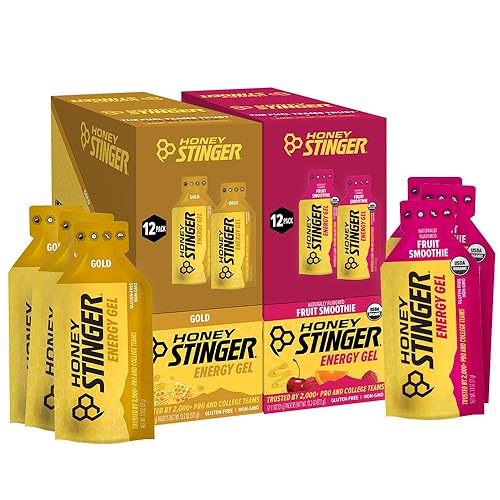
Honey Stinger Energy Gel Variety Pack of 24, 12 Packs Each of Gold and Organic Fruit Smoothie, Gluten Free & Caffeine Free, Sports Nutrition for Home & Gym, Pre and Mid Workout
View on Amazon – A variety pack that lets you test both the gold and organic fruit smoothie flavors before committing to a full 12-pack.
For runners who want a broader comparison of gel types, the list in Honey Stinger Energy Gels: 8 Best Options for Marathon Fueling (2026) places honey-based options alongside other formats, and Running Energy Gels Comparison: 7 Factors to Compare Before You Buy walks through the factors to weigh.
FAQ
Are Honey Stinger energy gels caffeine free?
The Organic Fruit Smoothie Energy Gel covered in this review is labeled caffeine free, according to the product name and listing. If you want caffeine, you will need a different product from the brand or from another company.
Are these gels gluten free?
The listing states gluten free. Anyone with celiac disease or a gluten sensitivity should still read the ingredient and allergen information on the package they receive, since formulations can change.
How many gels should I take during a marathon?
Most runners space gels at set intervals, often every 30 to 45 minutes, but the right number depends on pace, body size and personal tolerance. Work out a plan in training rather than relying on a general rule. The When to Take Energy Gels: A Marathoner's Timing Guide article covers timing in more detail.
Do I need water when I take this gel?
Most gels in this format are meant to be taken with water. The gel is thick, and a few sips of water help it go down and digest comfortably. Practice this on training runs so you know how much water you need.
Can I use these gels for a half marathon?
Yes, many runners use gels for half marathons, though the need depends on race duration and pace. A shorter race may require only one or two gels, depending on fueling strategy. See When to Take Energy Gels During Half Marathon: A Step-by-Step Timing Guide for a half-marathon-specific plan.
Is this product good for training as well as racing?
Yes, the product is marketed for both exercise and performance use. Many runners use gels during long training runs to practice their race-day fueling, which is the best way to find out how your stomach responds. If you want more background, see Maple Syrup vs Energy Gels (2026): Which Is Better for Marathon Fueling?.
How should I store the gels?
Keep them in a cool, dry place away from direct heat. Check the expiry date on each pouch, and avoid leaving them in a hot car, since heat can change the texture of the gel.
Are these gels suitable for everyone?
No single gel suits every runner. Stomach tolerance is individual, so test any gel on training runs before race day. If you have a medical condition, a history of GI problems, or questions about diabetes or blood sugar management, consult a doctor or registered dietitian before changing your fueling plan.
Final Verdict
The Honey Stinger Organic Fruit Smoothie Energy Gel 12-pack is a solid option for runners who want a caffeine-free, gluten-free, honey-based gel with a fruit flavor. Its strengths are the dietary labeling, the flavor profile, and the practical pack size for a training block. Its limits are the lack of caffeine and the thick texture, which some runners will find hard to take without water. Worth reading next: Do Energy Gels with Protein Work for Runners? What to Know.
If that profile fits your fueling plan, this product is worth a trial on your long runs. Buy a single pack or a variety pack first if you are unsure, and test it at race pace before your event.
About Ethan Brooks
Ethan Brooks is part of our editorial team and reviews and edits our marathon & half-marathon guides, checking product details against manufacturer specifications and owner feedback.