
 By Ethan Brooks
Updated November 2026
Choosing a marathon handbook training plan can be harder than running the race itself. Most books promise a clear path to the finish line, but they differ in weekly mileage, tapering approach, and how much they explain the reasoning behind each workout. The picks below were selected by reviewing published listings, publisher and author reputation, and the kinds of feedback owners commonly describe, with attention to beginner accessibility, plan depth, and practical race-day guidance.
Our top picks at a glance
- 1
 TOP CHOICEBest overallRunning Your First Marathon: The Complete 20-Week Marathon Training PlanView on Amazon
- 2
 TOP CHOICEBest for structured taperingThe Complete Marathon Training SystemView on Amazon
- 3
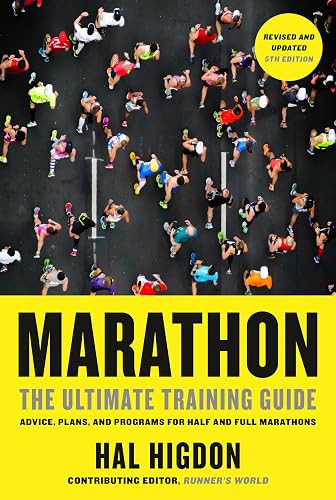 TOP CHOICEBest for reference and varietyMarathon, Revised and Updated 5th EditionView on Amazon
- 4
 Best for goal-based planningMarathon Training Plans DecodedView on Amazon
- 5
 Best for tracking progress16-Week Marathon Training Plan & Log BookView on Amazon
Our Top Picks
Quick Comparison
| Product | Best for | Key feature |
|---|---|---|
| Running Your First Marathon | First-time marathoners | 20-week beginner plan |
| The Complete Marathon Training System | Runners wanting smarter tapering | Strategic taper guidance |
| Marathon, Revised 5th Edition | Readers wanting broad reference | Plans for half and full |
| Marathon Training Plans Decoded | Goal-focused runners | Plans adapted to goals |
| 16-Week Marathon Training Plan & Log Book | Runners who log workouts | Built-in training log |
Running Your First Marathon: The Complete 20-Week Marathon Training Plan
Running Your First Marathon: The Complete 20-Week Marathon Training Plan
Best for: First-time marathoners who want a long, gradual build
This book suits runners who can already handle a few miles comfortably and want a patient, beginner-friendly schedule with plenty of time to adapt to higher mileage.
Pros
- Gradual 20-week progression reduces abrupt load jumps
- Clear weekly structure that is easy to follow
Cons
- Less depth for experienced runners chasing faster times
The Complete Marathon Training System
The Complete Marathon Training System: A Simple Approach to Smarter Training Plans, Strategic Tapering, Confident Race-Day Execution & a Practical … … (Highly Effective Marathon Training Plan)
Best for: Runners who want a strategic taper and race-day plan A related read: Runna Marathon Training Plan: 5 Best Picks for Every Runner.
This title is aimed at intermediate runners who want to understand how and why training volume changes near race day, not just follow a list of runs. Worth reading next: London Marathon Training Plan: 6 Best Picks for Every Runner (2026).
Pros
- Detailed explanation of tapering and race-day execution
- Structured approach suited to repeat marathoners
Cons
- Assumes some prior running experience
Marathon, Revised and Updated 5th Edition
Marathon, Revised and Updated 5th Edition: The Ultimate Training Guide: Advice, Plans, and Programs for Half and Full Marathons
Best for: Readers who want a broad reference covering half and full marathons
Owners often describe this as a go-to reference rather than a single plan, which suits runners who like to compare approaches and build their own schedule. If you want more background, see Personalised Marathon Training Plan: 6 Best Picks for Every Runner (2026).
Pros
- Covers both half and full marathon training
- Useful background on training principles and nutrition
Cons
- Requires more self-direction to turn advice into a weekly schedule
Marathon Training Plans Decoded
Marathon Training Plans Decoded: A Step-by-Step Guide to Training for Marathon the Smart Way, Building the Right Plan Adapted to Your Goals and … (Highly Effective Marathon Training Plan)
Best for: Goal-focused runners who want a plan matched to a target time
This guide is for runners who want to see how a plan changes with their goals, fitness level, and available training days. A related read: Customizable Marathon Training Plans: 6 Best Picks for Every Runner.
Pros
- Step-by-step explanations of how plans are built
- Adaptable structure for different time goals
Cons
- Some readers may find the detail more than they need for a first race
16-Week Marathon Training Plan & Log Book
16-Week Marathon Training Plan & Log Book: A Simple, Effective Marathon Training System
Best for: Runners who want to track every workout alongside the plan Worth reading next: Sample Marathon Training Plan: 7 Best Picks for Every Runner (2026).
This pick works well for runners who prefer a paper log to a phone app and want a compact, repeatable system across one training cycle. You may also like Coros Marathon Training Plan: 5 Best Picks for Every Runner.
Pros
- Combines a 16-week plan with a built-in log
- Simple layout that is easy to follow day to day
Cons
- Limited explanation of the training science behind each week
Buying Guide
Your experience level
Beginners benefit from longer plans with gentle mileage increases, while experienced runners often need more detail on speed work and tapering. Match the book’s plan length and depth to the number of marathons you have already completed.
Plan length and schedule
Most marathon plans run between 16 and 20 weeks. Check that the weekly training days and long-run structure fit the time you actually have, since a plan you cannot keep is of little use. Marathon Intermediate Training Plan: 7 Best Picks for Every Runner goes further into this.
Explanation versus schedule
Some books give you only the workouts, while others explain why each run exists. Choose the level of detail you want, especially if you plan to adjust workouts when life gets in the way.
Tracking tools
If you prefer to log your runs, a book with a built-in log can keep your training in one place. Otherwise, a plain plan may be all you need.
Good picks for this: Running Your First Marathon and 16-Week Marathon Training Plan & Log Book A related read: Marathon Training Plan 4 Hours: 7 Best Picks for Every Runner (2026).
FAQ
How long should a marathon training plan be?
Most plans for first-time marathoners run 16 to 20 weeks. Experienced runners often use shorter cycles built on an existing base. Worth reading next: Custom Marathon Training Plan: 5 Best Picks for Every Runner (2026).
Do I need a book if I already use an app?
A book is not required, but it can offer explanations and structure that apps may not. Many runners combine both.
Related reading
- Women's Running Half Marathon Training Plan: A 12-Week Guide for Beginners
- Twelve Week Half Marathon Training Plan: A Step-by-Step Guide
- Training for a Half Marathon Plan: A 12-Week Guide for Beginners
About Ethan Brooks
Ethan Brooks is part of our editorial team and reviews and edits our marathon & half-marathon guides, checking product details against manufacturer specifications and owner feedback.
