
 By Lauren Holland
Updated November 2026
Marathon running energy gels are concentrated carbohydrate packs designed to be swallowed during long efforts, when your body can no longer keep up with glucose demand from food alone. Choosing the right one comes down to how your stomach handles them, how much carbohydrate and sodium each pack delivers, whether you need caffeine, and whether the flavor and texture will still be palatable at mile 18. The six picks below were compared on specifications, brand reputation and the patterns owners commonly report, not on personal testing.
Our top picks at a glance
- 1
 TOP CHOICEBest overallHoney Stinger Organic Fruit Smoothie Energy GelView on Amazon
- 2
 TOP CHOICEBest for sensitive stomachsReal Food Huma Chia Energy GelView on Amazon
- 3
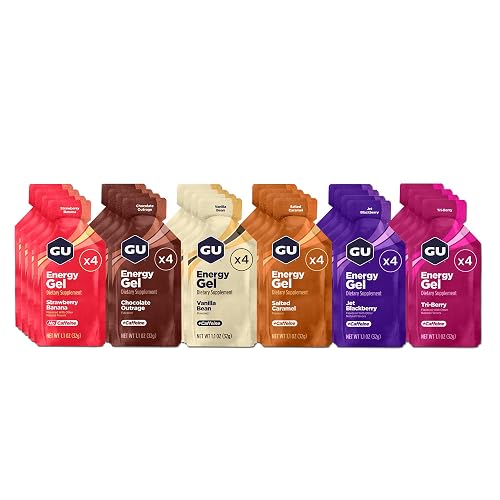 TOP CHOICEBest budget pickGU Energy Original Energy GelsView on Amazon
- 4
 Best for high-intensity race effortsGU Energy Roctane Ultra Endurance Energy GelView on Amazon
- 5
 Best for caffeine seekersGluten Free Buzz Organic Honey Energy GelView on Amazon
- 6
 Best for a caffeine-free honey optionHoney Stinger Gold Energy GelView on Amazon
Our Top Picks
Quick Comparison
| Product | Best for | Key feature |
|---|---|---|
| Honey Stinger Organic Fruit Smoothie Energy Gel | Overall race-day use | Organic fruit flavor, gluten free, caffeine free |
| Real Food Huma Chia Energy Gel | Sensitive stomachs | Chia-based, plant ingredients, variety pack |
| GU Energy Original Energy Gels | Budget-conscious training | Established formula, 24-count multipack |
| GU Energy Roctane Ultra Endurance Energy Gel | High-intensity efforts | Higher-concentration formula with added electrolytes |
| Gluten Free Buzz Organic Honey Energy Gel | Caffeine seekers | 50 mg caffeine with electrolytes |
| Honey Stinger Gold Energy Gel | Caffeine-free honey fueling | Honey base, gluten free, caffeine free |
Honey Stinger Organic Fruit Smoothie Energy Gel
Honey Stinger, Organic Fruit Smoothie Energy Gel, Gluten Free & Caffeine Free, for Exercise, Running and Performance, Sports Nutrition for Home & Gym, Pre and Mid Workout, 12 Pack, 13.2 Ounce
Best for: Runners who want a reliable all-round gel for training and race day.
This is a practical choice for marathoners who prefer a fruit-forward flavor over a sweet, honey-heavy taste. It suits runners training for their first marathon as well as experienced racers who want a single gel they can use across long runs.
Key specs:
- Organic fruit smoothie flavor
- Gluten free and caffeine free
- Sold as a 12-pack, 13.2 ounce total
Pros:
- Caffeine-free, so it can be used at any point without affecting sleep or pre-race routines
- Fruit flavor appeals to many runners who tire of sweet, syrupy gels
- Gluten free labeling makes it accessible to celiac runners
Cons:
- Thinner texture than some competitors, which can feel watery to some runners
- Caffeine-free means you will need a separate caffeine source if you rely on it late in a race
Bottom line: A strong default choice for runners who want a clean, gluten-free gel without caffeine and value a fruit flavor.
Real Food Huma Chia Energy Gel
Real Food, Stomach Friendly Energy Gels Huma Chia Energy Gel, Variety, 12 Gels
Best for: Runners with sensitive stomachs who want a plant-based, whole-food style gel.
Runners who experience GI distress from heavier, more processed gels often look at chia-based options. This pick is aimed at athletes who prioritize ingredient simplicity and digestive comfort over the sharpest possible carbohydrate delivery.
Key specs:
- Chia-based energy gel
- Variety pack of 12 gels
- Positioned as a stomach-friendly, plant-based formula
Pros:
- Ingredient list is simpler than many conventional gels
- Variety pack lets you test flavors during training
- Often chosen by runners who report fewer stomach issues
Cons:
- Texture is thicker and can be harder to swallow while running
- Carbohydrate concentration per pack may be lower than sports-specific competitors, so you may need to take more
Bottom line: Worth trying if your current gel causes cramps or nausea; plan to practice it on long runs before race day.
GU Energy Original Energy Gels
GU Energy, Original Energy Gels, Mixed Classic Flavors – 24 Count
Best for: Budget-conscious runners who need a dependable gel for high-mileage training.
Marathon training often means dozens of long runs, and the cost of fuel adds up. This multipack is designed for runners who want a familiar, widely used gel they can stock in volume. Running a First Marathon: A Step-by-Step Guide for Beginners goes further into this.
Key specs:
- Mixed classic flavors
- 24-count multipack
- Sold as a standard sports gel format
Pros:
- Multipack format reduces the per-gel cost for heavy training blocks
- Widely available and familiar to many coaches and training groups
- Assorted flavors help prevent taste fatigue
Cons:
- Classic flavors can taste intensely sweet to some runners
- Not positioned as a specialty formula for sensitive stomachs
Bottom line: A sensible choice for stocking up on training fuel, especially for first-time marathoners building a long-run routine.
GU Energy Roctane Ultra Endurance Energy Gel
GU Energy, Roctane Ultra Endurance Energy Gel, Assorted Flavors – 24 Count
Best for: Runners who want a more intense, higher-output gel for hard race efforts.
This variant is aimed at athletes who run at higher intensities or want a gel sized for longer, harder efforts. It fits runners who already know their gut tolerance and want a more concentrated option for the back half of a marathon.
Key specs:
- Assorted flavors
- 24-count multipack
- Formulated for ultra-endurance use
Pros:
- Positioned for higher-intensity output than standard gels
- Multipack keeps cost per gel manageable for regular use
- Flavor variety suits multi-hour racing
Cons:
- Higher concentration can be harder on sensitive stomachs if not paired with enough water
- Best suited to runners who have already practiced with gels
Bottom line: A good fit for experienced marathoners pushing pace in the late miles, provided the gel is tested in training first.
Gluten Free Buzz Organic Honey Energy Gel
Workout Gels for Gym, Running & Hiking, Magnesium, Sea Salt & Potassium, Green Tea Caffeine, Gluten Free Buzz Organic Honey Energy Gel with Electrolytes, 50mg Caffeine, 12ct
Best for: Runners who want caffeine and electrolytes in a single honey-based gel.
This gel combines an organic honey base with magnesium, sea salt, potassium and green tea caffeine. It suits runners who use caffeine as a race tool and want electrolyte support in the same packet.
Key specs:
- 50 mg caffeine per gel
- Electrolytes including magnesium, sea salt and potassium
- Gluten free, organic honey base
- Sold as a 12-count pack
Pros:
- Caffeine and electrolytes in one gel simplify race-day fueling
- Organic honey base appeals to runners avoiding artificial ingredients
- Gluten free labeling supports celiac-safe use
Cons:
- Caffeine content is not suitable for runners who avoid stimulants or are sensitive to them
- Honey texture can be dense, so take it with water
Bottom line: Best for runners who want caffeine and electrolytes together; check your caffeine tolerance before using it on race day. Consult a physician if you have heart or blood pressure concerns.
Honey Stinger Gold Energy Gel
Honey Stinger Gold Energy Gel, Gluten Free & Caffeine Free, for Exercise, Running and Performance, Sports Nutrition for Home & Gym, Pre and Mid Workout, 12 Pack, 13.2 Ounce
Best for: Runners who want a honey-based, caffeine-free gel with a classic sports gel format.
This pick suits runners who like honey as a carbohydrate source and want to avoid caffeine entirely. It is a straightforward option for training and race day alike.
Key specs:
- Honey-based energy gel
- Gluten free and caffeine free
- Sold as a 12-pack, 13.2 ounce total
Pros:
- Caffeine-free, suitable for any time of day
- Honey base is familiar to many runners as a natural carbohydrate source
- Gluten free labeling
Cons:
- Honey flavor and thick texture may not suit every palate
- Without caffeine, it may not deliver the alertness boost some runners want late in a race
Bottom line: A solid choice for runners who prefer honey and want a caffeine-free gel for both training and racing.
Buying Guide
Carbohydrate content per gel
Most sports gels deliver roughly 20 to 25 grams of carbohydrate per packet, and many marathon plans aim for about 30 to 60 grams of carbohydrate per hour depending on pace and gut training. Check the label and count how many gels you will need per hour before you buy in bulk.
Good picks for this: GU Energy Roctane Ultra Endurance Energy Gel, GU Energy Original Energy Gels
Caffeine content
Caffeine can improve perceived effort in the later stages of a marathon, but tolerance varies widely. Caffeine-free gels suit runners who avoid stimulants or want to fuel at any time of day. If you use caffeine, practice with the same amount you plan to take on race day.
Good picks for this: Gluten Free Buzz Organic Honey Energy Gel, Honey Stinger Gold Energy Gel
Electrolyte content
Sodium and potassium matter on long, sweaty efforts, especially in heat. Gels with added electrolytes can help, but they do not replace salt tablets or sports drinks in hot conditions. Look for sodium amounts listed on the label.
Good picks for this: Gluten Free Buzz Organic Honey Energy Gel, GU Energy Roctane Ultra Endurance Energy Gel
Stomach tolerance and ingredients
Gut comfort is the most common reason runners abandon a gel. Simpler ingredient lists, lower fructose loads and plant-based bases can help runners with sensitive stomachs. Test any new gel during long training runs before race day.
Good picks for this: Real Food Huma Chia Energy Gel, Honey Stinger Organic Fruit Smoothie Energy Gel
Texture and how easy it is to swallow
Thin gels are easier to take with water but can feel watery. Thick or honey-based gels deliver a concentrated dose but may require more water to swallow. Try a few textures during training to find what you can take at pace without gagging.
Good picks for this: Honey Stinger Organic Fruit Smoothie Energy Gel, Honey Stinger Gold Energy Gel
Flavor variety
Flavor fatigue is real over a long training block. Variety packs let you rotate flavors and identify the ones you tolerate best. A single flavor pack is fine if you already know you like it.
Good picks for this: Real Food Huma Chia Energy Gel, GU Energy Original Energy Gels
Packaging and value per gel
Multipacks reduce the cost per gel and make it easier to stock enough for a full training cycle. Check how many gels are in each box and plan your weekly usage so you do not run short during peak training weeks.
Good picks for this: GU Energy Original Energy Gels, Honey Stinger Gold Energy Gel
FAQ
How many energy gels do I need for a marathon?
Many marathon plans target 30 to 60 grams of carbohydrate per hour after the first hour. Since most gels provide around 20 to 25 grams each, that is often one to three gels per hour. Practice your exact schedule during long runs.
When should I take my first gel during a marathon?
Most runners start taking gels around 45 to 60 minutes into the race, then continue at regular intervals. Starting earlier can help some runners, but it is best to rehearse this timing in training.
Can I take energy gels with water?
Yes, and most runners are advised to do so. Water helps move the gel through your system and reduces the risk of stomach upset. Drink according to your sweat rate and the conditions.
Are caffeine-free gels as effective as caffeinated ones?
Caffeine-free gels still provide carbohydrate for energy, which is the primary fuel need. Caffeine may improve perceived effort for some runners, so the choice depends on your tolerance and preferences.
Should I try a new gel on race day?
No. Test any new gel during long training runs, ideally at race pace, to check how your stomach reacts before relying on it on race day.
Do energy gels expire?
Yes. Check the best-by date on the packet, store gels in a cool, dry place and avoid leaving them in a hot car. Discard any gel with an odd smell, separated texture or damaged packaging.
Conclusion
For most marathon runners, the best choice depends on stomach tolerance, caffeine preference and how much you plan to use in training. Honey Stinger Organic Fruit Smoothie Energy Gel is a practical all-round option, Real Food Huma Chia Energy Gel suits sensitive stomachs, and GU Energy Original Energy Gels works well as a budget multipack for heavy training. Runners who want more intensity can look at GU Energy Roctane Ultra Endurance Energy Gel, while those who want caffeine and electrolytes together may prefer Gluten Free Buzz Organic Honey Energy Gel. Honey Stinger Gold Energy Gel fits runners who prefer a caffeine-free honey option. Whichever you choose, rehearse your fueling plan in training and consult a physician or sports dietitian if you have medical concerns.
Sources
- Research summaries on carbohydrate intake and endurance exercise performance (nih.gov)
- Guidance on labeling requirements, including caffeine and allergen declarations on food products (fda.gov)
- Position guidance on nutrition and fluid needs for endurance athletes (acsm.org)
Related reading
- 5 Best Energy Gels for Marathon Running: Expert Picks Compared (2026)
- When to Take Energy Gels During Half Marathon: A Step-by-Step Timing Guide
- Science in Sport Isotonic Energy Gels: How to Use Them for Marathon Fueling
- Running Energy Gels Comparison: 7 Factors to Compare Before You Buy
- Maurten Energy Gels 100: How to Use Them for Marathon Fueling (2026)
- How Many Energy Gels for Half Marathon Runners Need: A Step-by-Step Plan
About Lauren Holland
Lauren Holland is part of our editorial team and reviews and edits our marathon & half-marathon guides, checking product details against manufacturer specifications and owner feedback.
